Pluggable by design
A source adapter supplies bounded records and provenance; Org2 supplies the shared staging, review, linking, and promotion semantics.
OpenOrg is a local-first workspace for running work with people and agents from files you control. It keeps the source behind a decision, delegates work with bounded context, brings back the decisions that need you, and records the finished result in the open Org2 format.
TODO state, schedules, deadlines, priorities, effort, tags, IDs, aliases, and links are readable in the note. Org2 turns them into focused agenda views and a navigable knowledge graph.
org2 agenda --dir ~/notes --recursive --tui
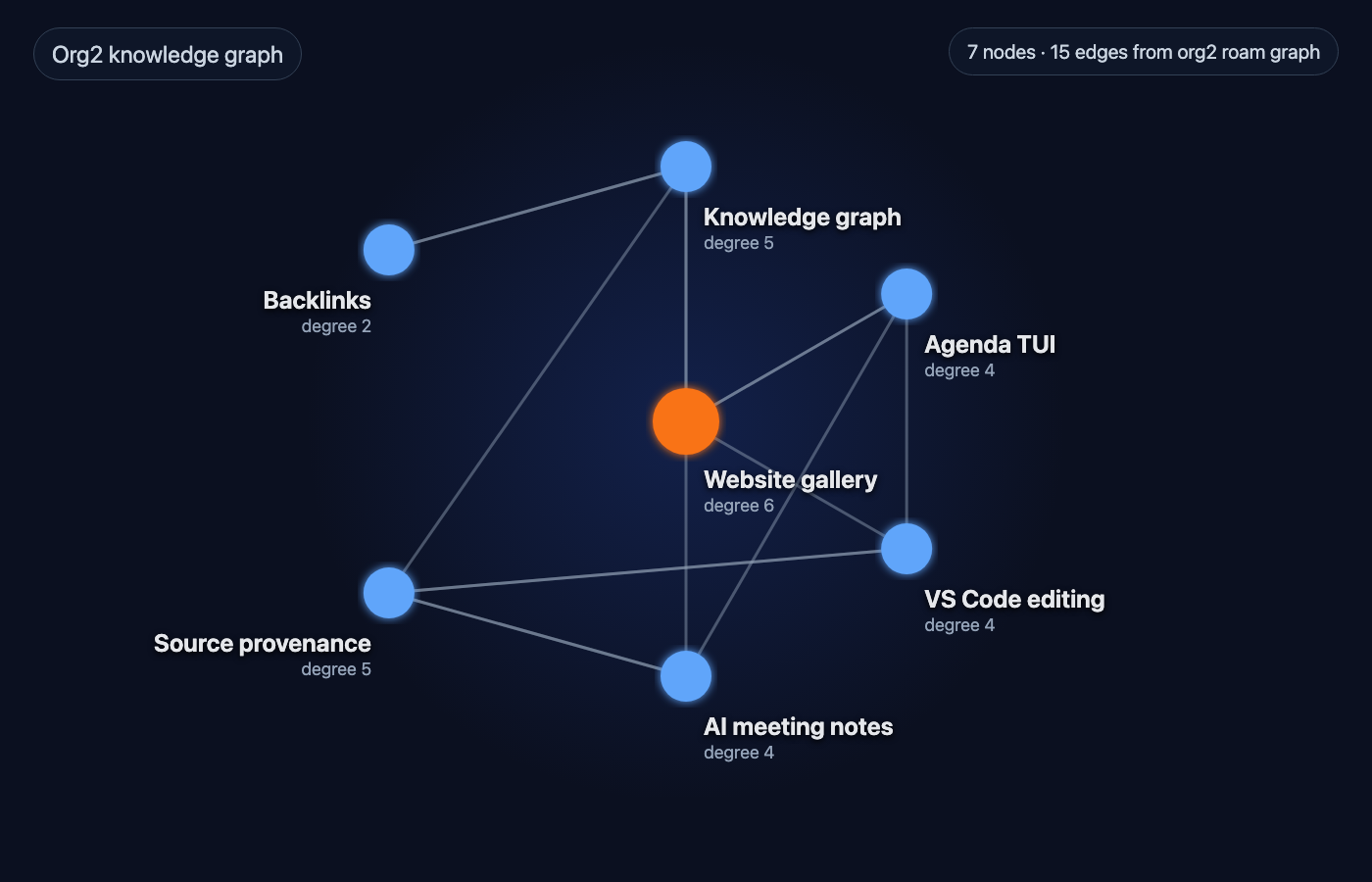
org2 roam graph --dir ~/notes --recursive --format report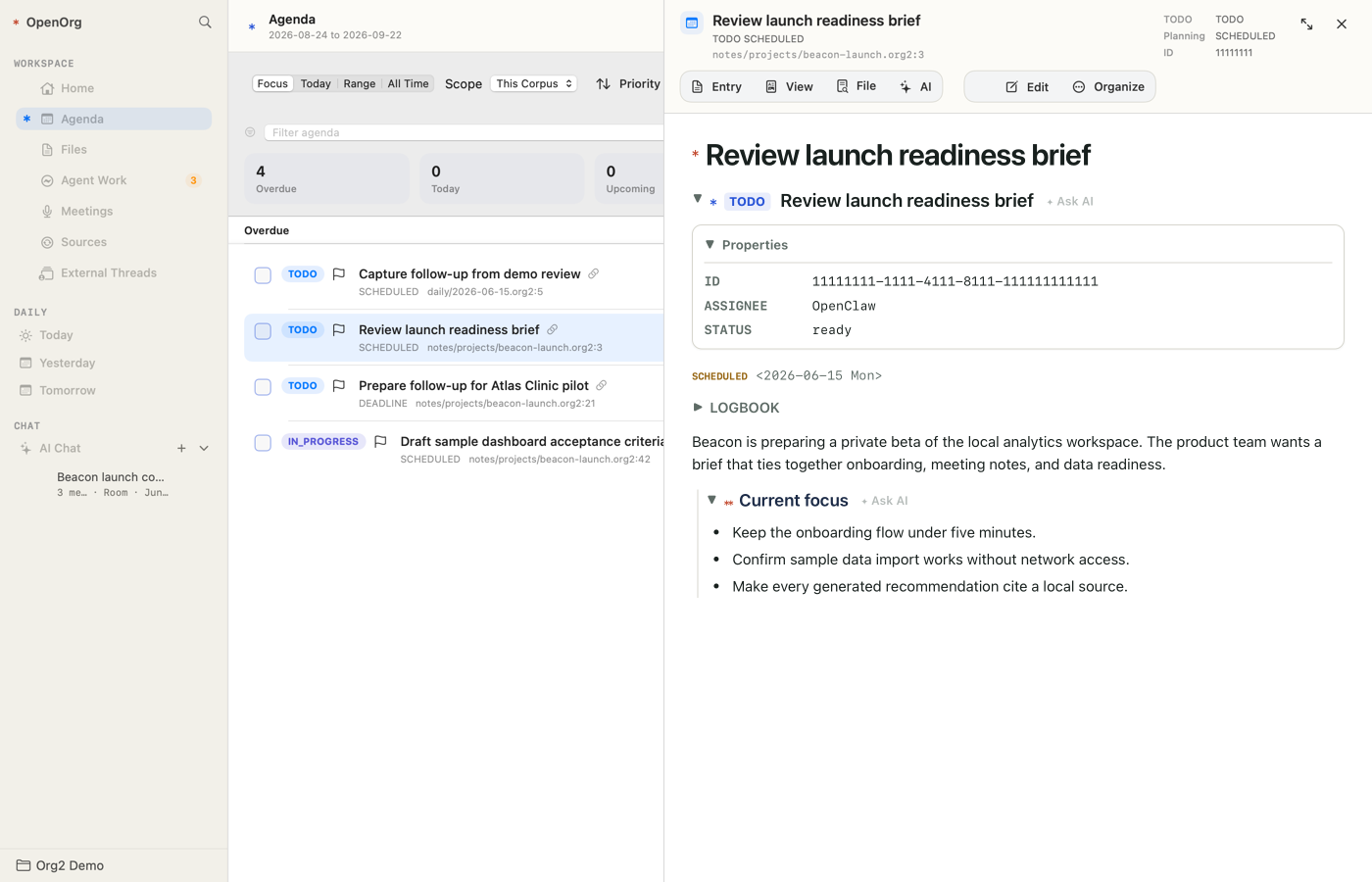
Selected context, citations, plans, outputs, validation, clarifications, and approvals stay together while the work moves. People can see what happened before approving a consequential action—and what evidence proves it finished.
org2 agent context --query "launch risks" --dir ~/notes --recursive
org2 doctor --dir ~/notes --json
org2 ledger list account-outreach --eligible --dir ~/notes --json
org2 approvals --dir ~/notes --recursive --format json
org2 review list --status pending --dir ~/notes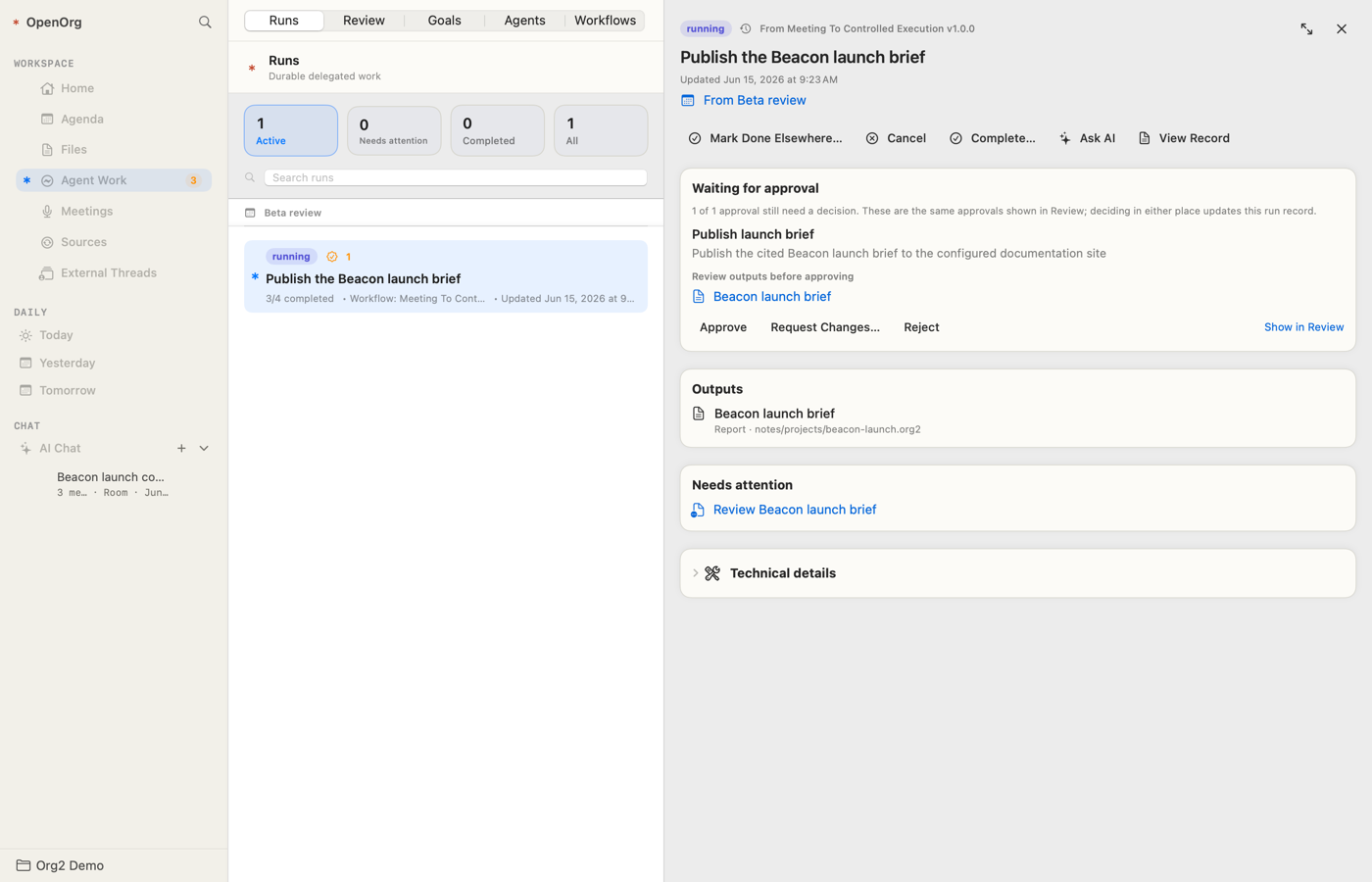
A shared AI room lets you bring any named local, remote, hosted, or self-hosted destination into one corpus-grounded conversation. Every participant sees the same bounded transcript, keeps its own identity and model, and answers inside one visible agent round.
@research, @writer, @local-model, or any destination you configure; @all asks every participant.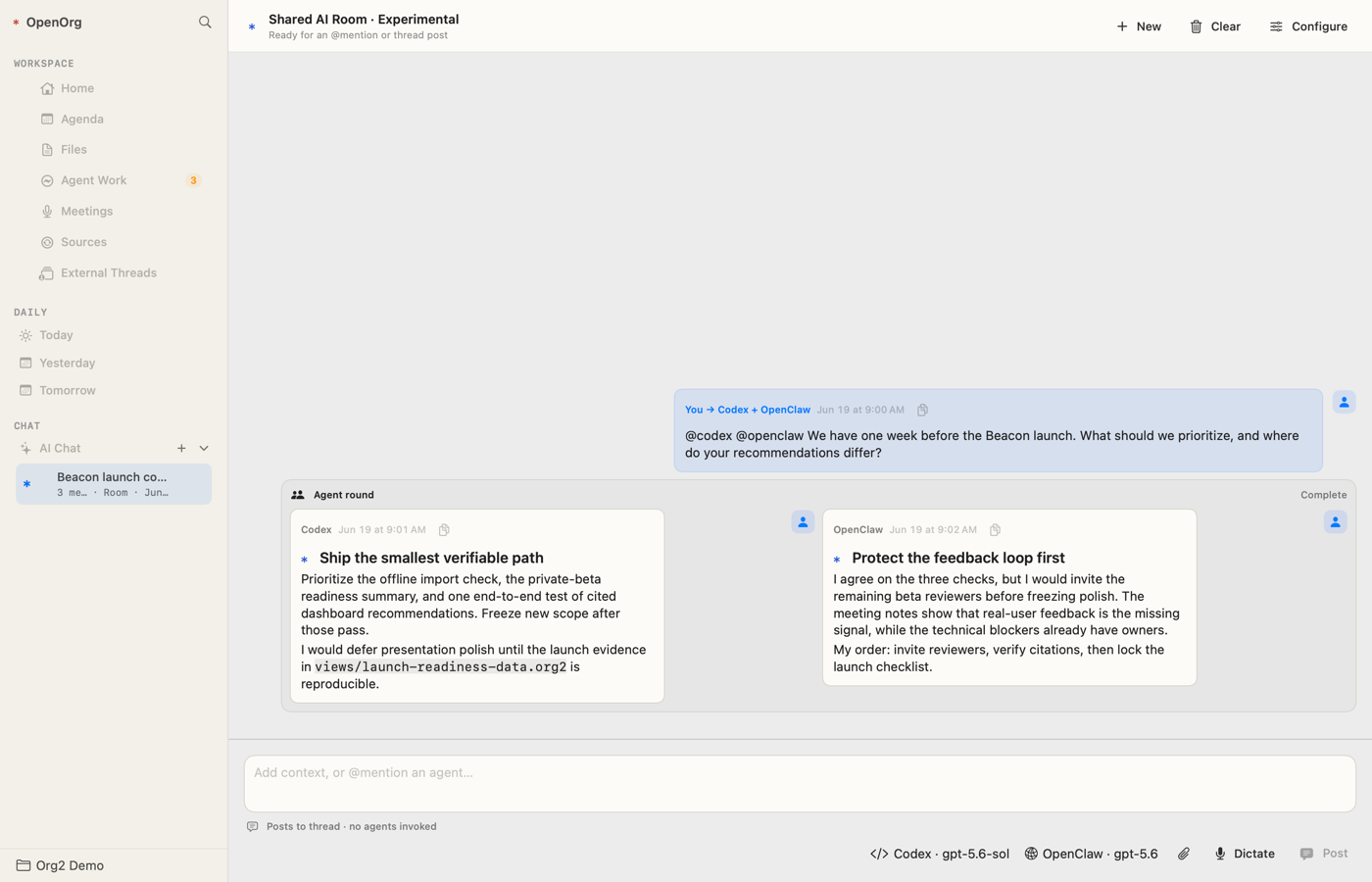
OpenOrg renders Org2 notes that declare local or configured remote datasets, reusable SQL views, materialized results, freshness policy, and deterministic charts. Refresh is explicit; merely opening or publishing a document never runs a warehouse query.
org2 query-data --file notes/readiness.org2 --inspect
org2 query-data --file notes/readiness.org2 --results weekly --apply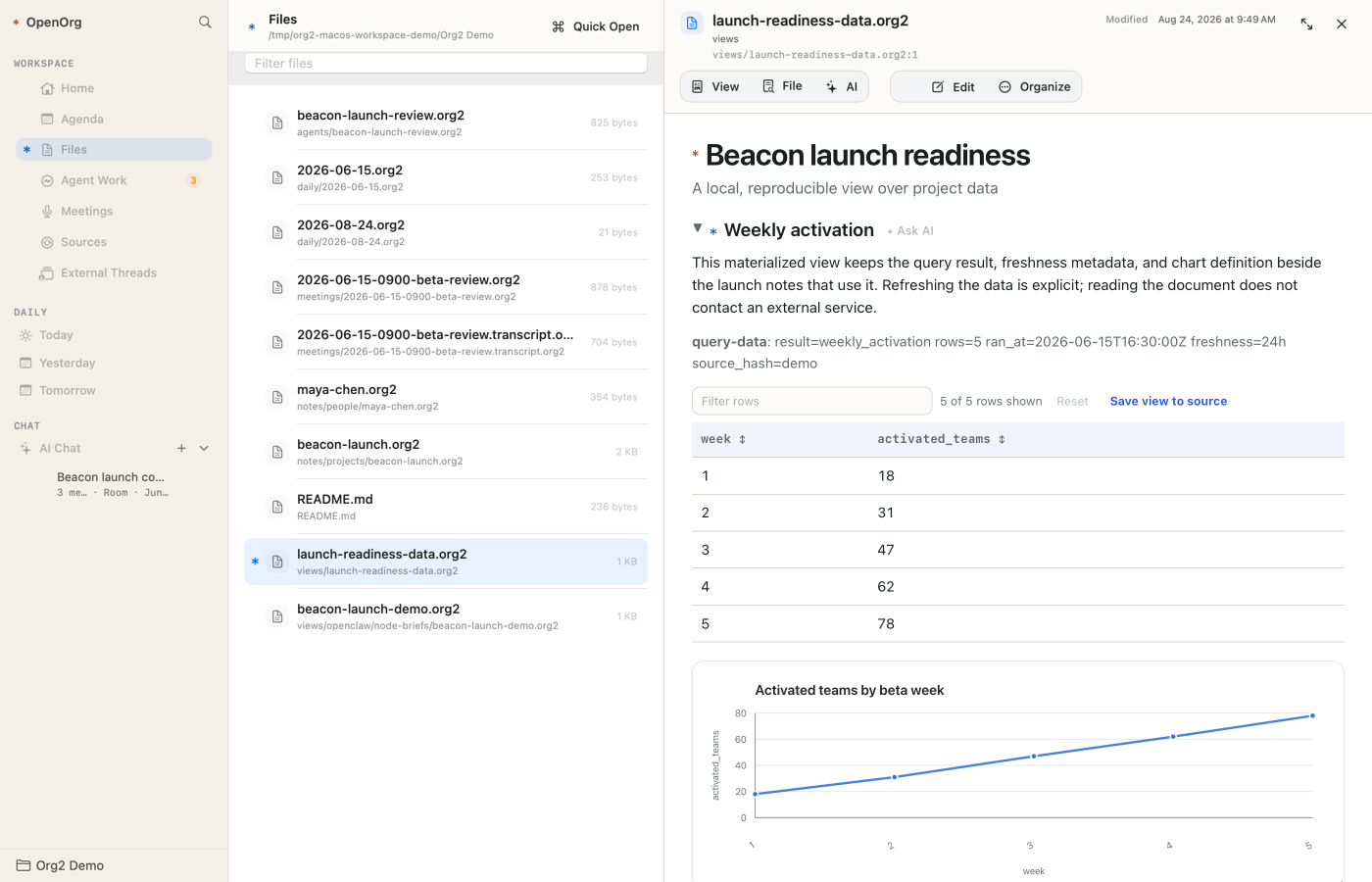
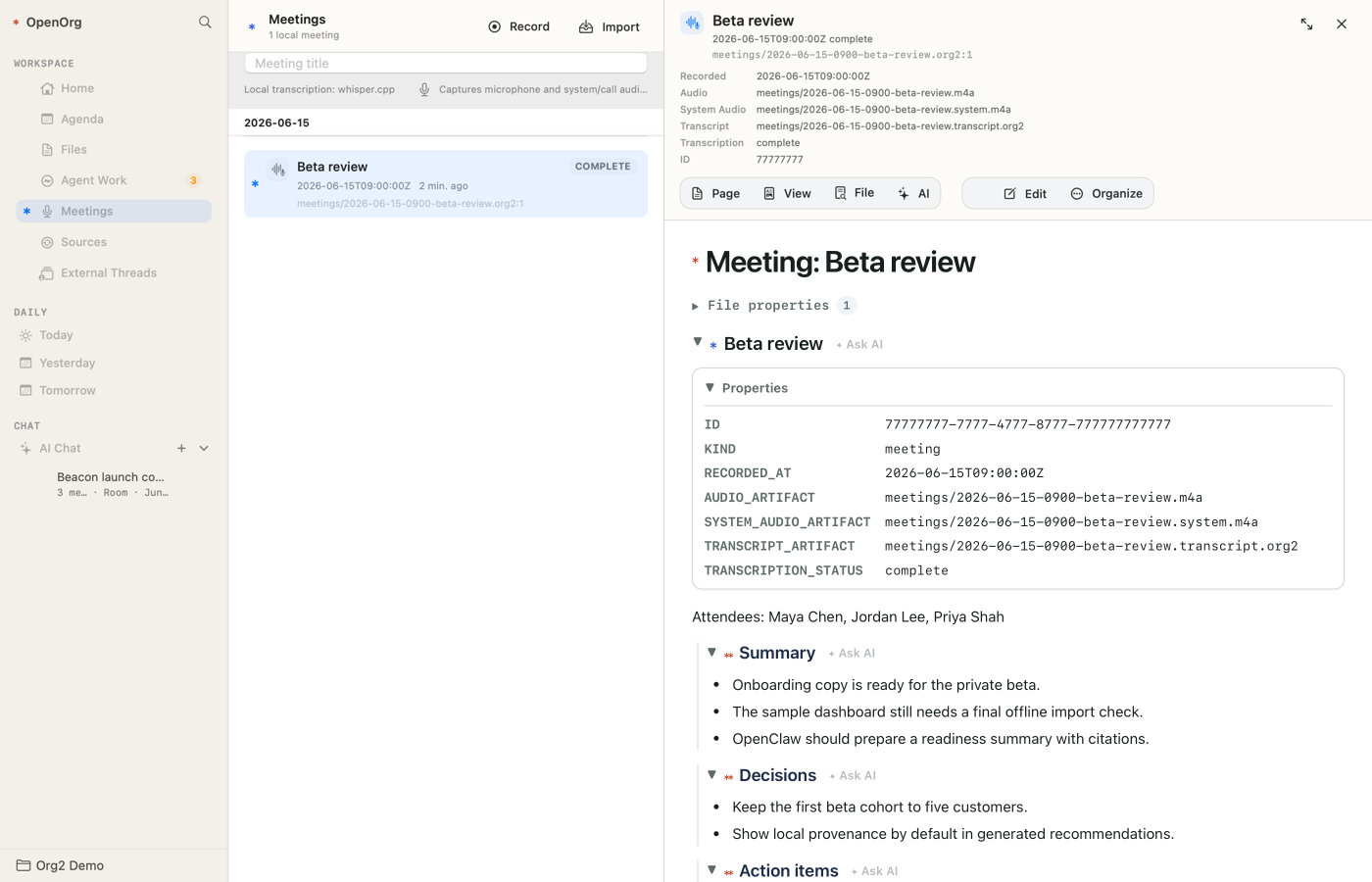
OpenOrg can record or import a meeting, keep audio and transcripts local, and render summaries, decisions, and follow-ups from ordinary files. Those records can then feed agenda items, cited agent runs, entity pages, and reports.
Source profiles stage external material as inspectable captures with stable identity and provenance. The boundary is designed for ingestion plugins, so messages, documents, issues, mail, datasets, and future sources can enter the same reviewable flow.
A source adapter supplies bounded records and provenance; Org2 supplies the shared staging, review, linking, and promotion semantics.
Machine bindings and credentials stay outside canonical notes. Staged files retain stable source IDs, timestamps, hashes, URLs, and provenance.
Imported material lands under configured raw and views zones. People and agents can redact, verify, and promote selected knowledge without treating an external mirror as canonical truth.
Agent work can finish as a talk, an evidence-backed analysis, a customer quote, marketing collateral, or a published site. The artifact stays connected to the source material and approvals that produced it.
Develop the narrative beside its research, preview the deck in the Mac app, and export Beamer-compatible TeX or a presentation-ready PDF.
Turn approved source material into quotes, reports, and marketing collateral, then export a clean reading-layout PDF.
Publish one document or a complete project with navigation, styles, rewritten links, and generated indexes. This documentation site is built by Org2.
org2 fmt --dir ~/notes --recursive --check
org2 publish docs-site --config org2.json --preview
org2 export beamer --file talk.org2 --pdf --applyA scan-friendly inventory of the broader surface available today.
@mentions, @all, per-agent models, and independent progress.agents/skills discovery and autocomplete for user-invocable AI skillsOpenOrg for macOS is the primary product experience. The Org2 CLI, VS Code extension, language server, and file format provide independent developer surfaces for the same local corpus.